When India’s spiritual heritage crosses borders and finds a home in foreign hearts
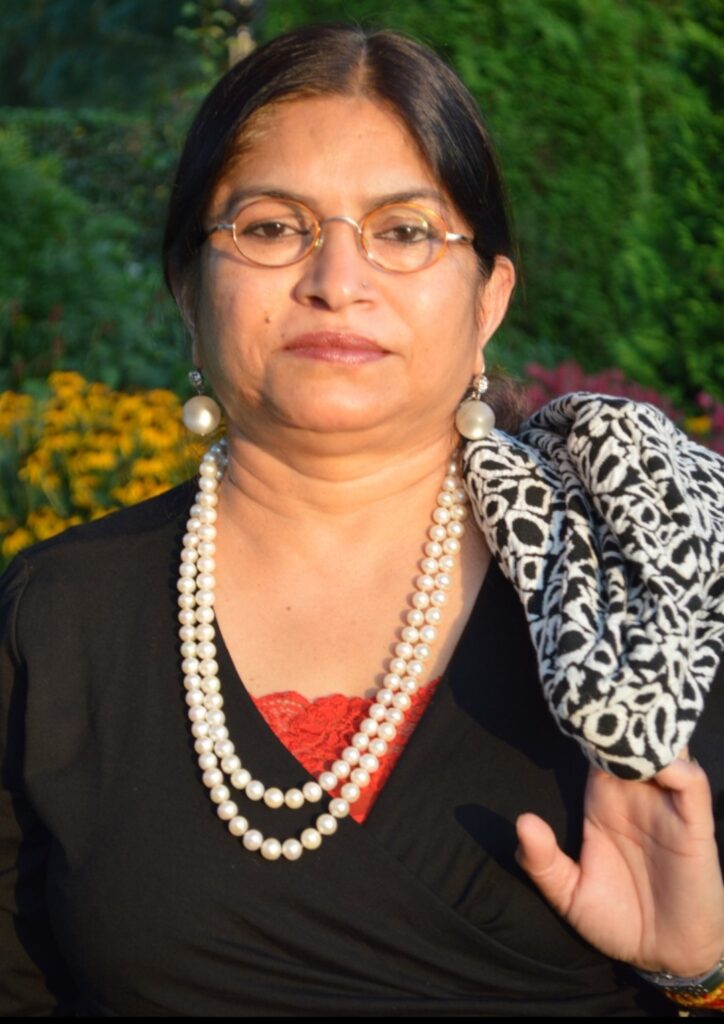
Prof. Pushpita Awasthi
Where does a human being truly take birth?
In the body, the soil of a homeland, the traditions of a family—or in that quiet moment when consciousness recognises something it cannot explain?
Some experiences resist easy answers. They remain within us, gathering meaning with time.
I was reminded of this during an encounter in a Dutch hospital. A woman standing beside me introduced herself simply:
“I am Sita.”
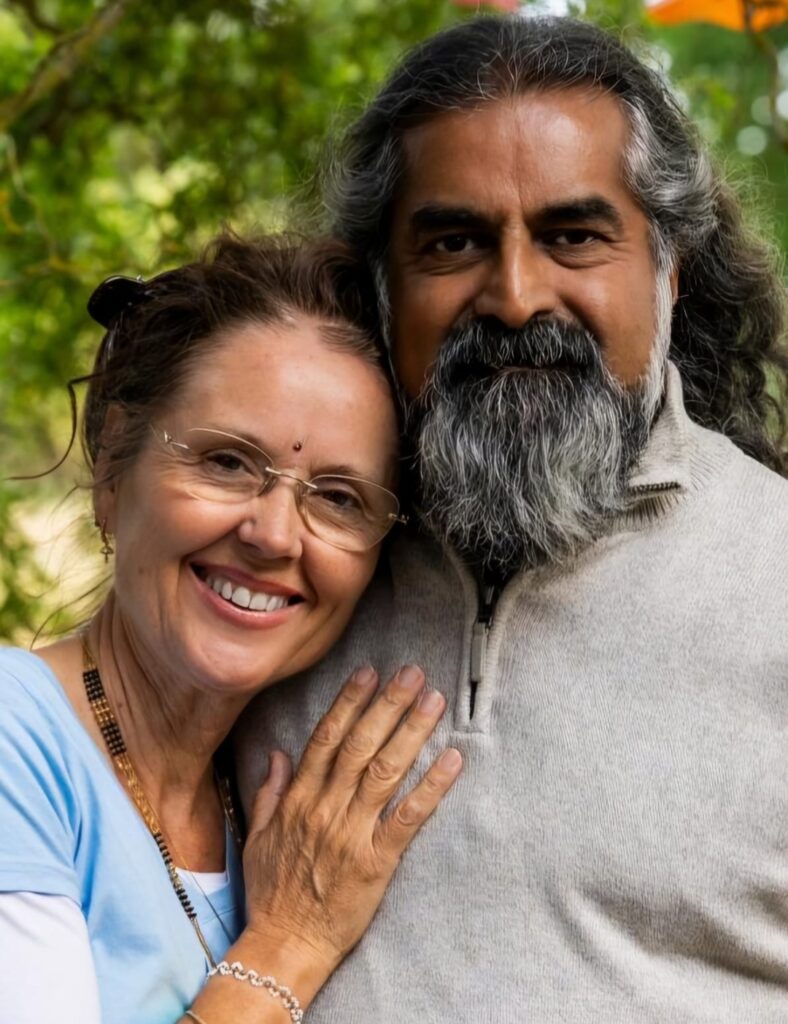
She was Dutch. Her face, language and cultural background were entirely different from mine. Yet the name immediately created a sense of familiarity.
It made me wonder about the mysterious ways in which cultures travel. Geography can separate people, but ideas, symbols and spiritual practices often move far beyond their place of origin.
This is perhaps one of the most remarkable features of the Sanatan tradition. Its central concerns—truth, compassion, self-discipline, service and self-realisation—can be encountered beyond the geographical boundaries of India.
Yoga has found practitioners in Russia. Meditation and Hindu spiritual traditions have developed communities in the Netherlands. The syllable Om has acquired personal meaning for people who were born far from India.
These encounters suggest something larger than cultural exchange: the possibility of spiritual ideas becoming part of another person’s lived experience.
From Russia to the Netherlands
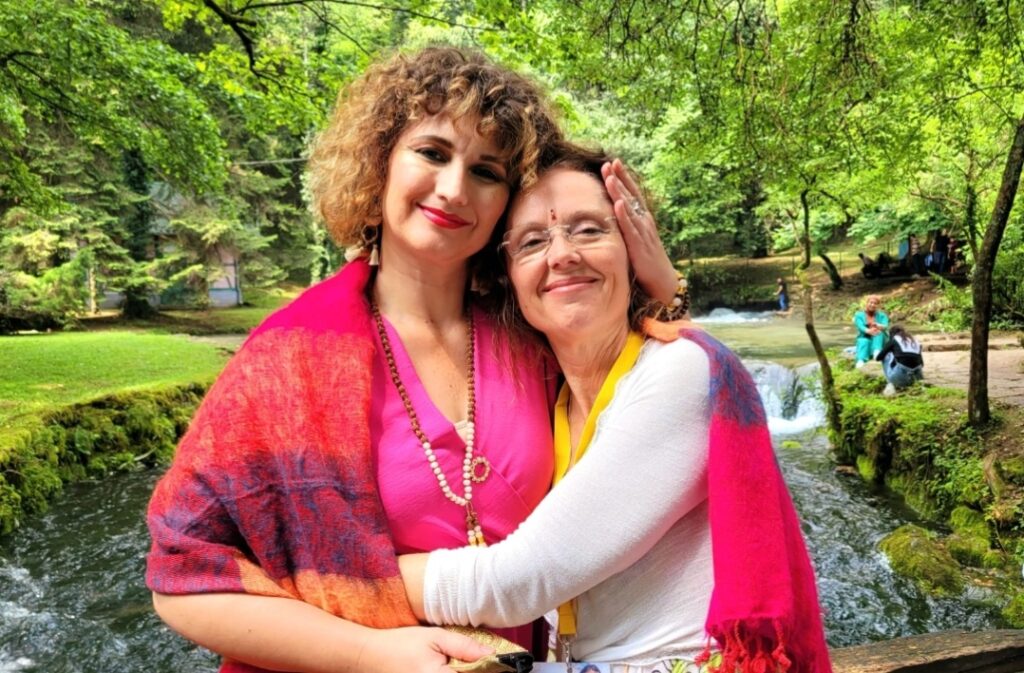
Olga Uchenik has been teaching Kundalini Yoga in Russia since 2005. Her students come from different countries, and her engagement with Indian traditions includes Vastu, astrology and Panchakarma.
In the Netherlands, the Mohan Foundation conducts programmes and workshops concerned with humanity, Hindu philosophy, meditation, yoga and consciousness. Bharati has also published books in English and Dutch, including Mohanam and Mast.
What interests me is the transition from knowledge to practice.
A tradition may begin as something one reads about or encounters intellectually. With sustained practice, however, it can influence daily habits, relationships and one’s understanding of life.
That is where spirituality acquires its most meaningful form—not in the repetition of ideas, but in their application.
Shiva Beside the North Sea
On the Dutch coast, at the home of Kumhar Ji, Shirdi Sai Baba has been worshipped for years. Within the same premises stands a large Shiva lingam established by a devotee.
The setting is striking. The lingam faces the sea, its forehead marked with sandalwood, while water flows continuously over it.
Every Monday, Dutch devotees gather for Rudrabhishek. They chant Sanskrit mantras and participate in the ritual with evident concentration.
For me, the scene brought back memories of Ujjain and Mahakaleshwar, and of my childhood and youth in Kashi. I remembered offering Ganga water, flowers and belpatra to Baba Vishwanath.
The physical setting could hardly have been more different. Yet the emotional experience felt remarkably familiar.
What impressed me most about this temple was its simplicity.
There is no donation box. No pressure to contribute money. The priest, Kanhaiya Ji—also known locally by the Dutch name Boss Ji—moves among the devotees, leading the chanting and performing the aarti.
After the ritual, sacred ash from the abhishek is applied to the devotees’ foreheads. Offerings brought by visitors are shared as prasad.
His wife Carla, now affectionately called Sarla, serves ice cream as prasad. After the ceremony, devotees sit together over tea and coffee, talking late into the evening.
There is an unusual informality in the space. Religious practice does not appear separated from ordinary human interaction.
After the aarti, I instinctively placed a few euros before the priest. He returned them gently.
When I bent to touch his feet, he stopped me by placing both hands on my shoulders and said:
“The presence of a learned devotee like you is itself the good fortune of this temple.”
The sentence stayed with me.
Perhaps a temple is valuable not because of what one gives there, but because of what one learns to release—ego, anxiety, pride and the need for recognition.
That evening, beside the North Sea, Shiva seemed less like a distant deity and more like a presence that had entered an unfamiliar landscape without losing its essence.
Sita and Mithila
Mohan Ji and Gopal Ji have introduced several Dutch seekers to Indian names associated with the tradition.
The name Sita, however, acquired a special significance for me.
The woman I met in the hospital was nearly eighty. Mohan Ji had given her the name Sita, and she had named her home Mithila.
The choice of those names carried an entire cultural memory.
Sita evokes ideas of dignity, courage, compassion, patience and moral strength. Mithila recalls a civilisation, a landscape and a literary-spiritual tradition deeply associated with her story.
For someone born and raised in the Netherlands to adopt these names is more than an act of translation. It reflects a personal relationship with the meanings attached to them.
Names can sometimes become bridges between cultures.
When Om Becomes Personal
Natasha, who is involved in caring for the elderly and is also known as Chiku Ji, wears an Om pendant around her neck.
She describes its significance in deeply personal terms:
“My breath and my life are guided by the eternal power of Om.”
The statement illustrates how a religious symbol can acquire meaning beyond its visual form.
For her, Om is connected with breath, identity and everyday life. The symbol becomes significant because of the practice and awareness associated with it.
This is where spirituality moves from symbolism towards experience.
The Measure of Devotion
My experiences with these communities have also prompted a more demanding reflection on faith.
Religious practice is visible. Character is not.
It is easy to attend a temple, recite a mantra or wear a tilak. The greater challenge is to carry the values associated with those practices into ordinary life.
Truthfulness, selfless service, restraint, humility and compassion cannot be demonstrated through ritual alone. They have to appear in one’s conduct.
Over time, repeated practice can become a habit; a habit can shape character; and character can determine the way a person lives.
In that sense, Sita becomes more than a cultural name. She represents qualities that can be practised.
Om becomes more than a sacred syllable when it influences the rhythm of one’s inner life.
Shiva becomes more than an image when devotion changes the person who worships him.
This, perhaps, is where the enduring relevance of Sanatan lies.
Does the Soul Have a Nationality?
One question continues to accompany me:
Does the soul have a nationality?
I am not sure it does.
A person may be born in India, Russia, the Netherlands or anywhere else. Yet the search for truth, compassion, service and self-understanding is not confined to geography.
Perhaps this is why spiritual traditions can cross borders without losing their essential meaning.
They travel through people.
Through names.
Through practices.
Through relationships.
Through the quiet transformation of individual lives.
The most significant journey of a civilisation may therefore not be the movement of its people across the world, but the movement of its deepest values into the consciousness of others.
That is what I witnessed beside the North Sea.
And perhaps that is where Sanatan finds its widest meaning—not as a boundary that separates one culture from another, but as a continuing human quest for truth, inner discipline and a more compassionate way of living.
Its geography may be Indian. Its questions are universal.
And its deepest home may always be the human soul.